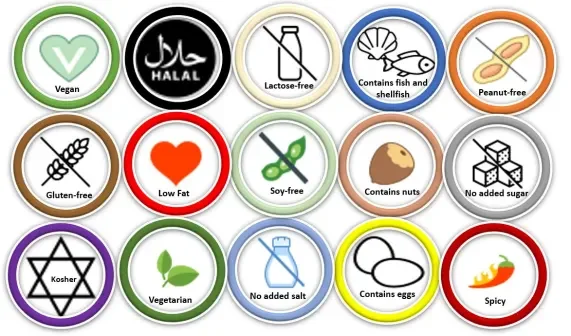
Dietary laws and practices
Dietary laws and practices reflect a diverse range of beliefs and values, emphasizing respect for life, purity, health, and communal solidarity. They significantly influence the eating habits and cultural identities of communities around the world.
These sets of rules dictate what adherents can and cannot eat and how food must be prepared.
How To Understand
if a restaurant fully Halal
To determine if a restaurant is fully or partially halal, consider these steps: Inquire Directly: Ask staff about their halal practices, including the use of halal ingredients, prevention of cross-contamination, and alcohol service.
Menu Analysis: Look for menu items specifically labeled as halal. Partially halal restaurants often indicate which dishes comply.
Research Online: Check reviews, social media, or the restaurant's website for mentions of halal practices and offerings.
Community Insights: Seek feedback from community forums or social media groups where diners share their halal dining experiences.
Fully halal restaurants adhere to halal standards across all food preparation and typically do not serve alcohol, whereas partially halal establishments offer some halal options alongside non-halal items or alcohol.
What is Halal?
Halal, an Arabic word meaning "permissible," refers to what is allowed under Islamic law. In the context of food, it dictates what Muslims are allowed to eat and drink. The key principles include:
- Prohibition of Pork and Alcohol: Consumption of pork and its by-products, and all forms of alcohol, is strictly forbidden.
- Slaughter Requirements: Animals must be healthy at the time of slaughter and killed in the name of Allah. The blood must be drained from the veins.
- Avoidance of Contamination: Halal foods must not be prepared, processed, or stored using any appliance or container that has been contaminated with non-Halal substances.

What is Kosher?
Kosher, meaning "fit" or "appropriate" in Hebrew, is the set of Jewish dietary laws (kashrut) detailing which foods can be consumed and how they must be prepared. Key aspects include:
- Prohibited Animals: Certain animals, such as pigs and shellfish, are non-kosher and cannot be consumed. Only ruminants with split hooves that chew their cud are considered kosher.
- Slaughter Method (Shechita): Animals must be slaughtered by a skilled professional (shochet) with a swift, humane cut to the throat. Blood must be completely drained.
- Separation of Meat and Dairy: Meat and dairy products cannot be eaten together, prepared on the same utensils, or served on the same plates.

Cocktails
Our craft cocktails combine premium spirits, artisanal ingredients, and creative mixology to deliver a symphony of flavors.